
In this article im going to do a deepdive into the scientific literature to provide evidence why I don’t believe Finasteride causes Depression, and in fact may help treat depression in specific people.Before I want to disprove this theory I’d like to briefly explain how finasteride has been proposed to affect neurosteroids.
Neurosteroids are not a particular class of steroids, and the term is used to refer to steroids produced in the central nervous system. Neurosteroids can be split into two main groups;
- Those that have direct effects neuronal excitability (modulate the excitement or calming of neurons) and thus play an important role in managing moods
- Those that have indirect effects promoting gene expression and neuro plasticity
Much of the focus of the potential finasteride-neurosteroid link, is in regards to a neurosteroid called Allopregnanolone, which plays an important role in stress response and mood regulation as it is known to bind to the GABA receptors in the brain. Many people that claim Finasteride causes depression explain it happens through its potential effects on neurosteroid protection. While it is true the enzyme, 5 alpha reductase, is needed for the eventual production of Allopregnanolone, this theory falls apart when you consider that there are three different 5-a reductase enzymes.
Finasteride primarily affects the type 2 5AR enzyme, and has a negligible effect on the type 1 5AR enzyme.

Fortunately, in humans the type 2 5AR enzyme is most active in the scalp and prostate, and isn’t active in the brain where neurosteroids are synthesized.

People who discuss the possibility that finasteride may affect neurosteroid production usually don’t realize there are two different isoenzymes, or mistakenly believe that the type 2 5AR enzyme is found in the brain and is involved in neurosteroid production because studies that show its presence in mice’s brains, but evidently its presence differs between humans and mice.
Another reason you can’t compare finasterides’ effects on mice to humans, is that the fundamental way it works in mice differs in humans. This is because in rodents, Finasteride affects both isoenzymes of 5-alpha reductase.

It should be noted that Dutasteride inhibits both isoenzymes in humans, so this article shouldnt be extrapolated to Dutasteride. However in a separate article I will explain why I don’t think Dutasteride is likely to affect neuroproduction either.
So as established there is no current theoretical mechanistic action of finasteride that could affect neurosteroid production to any meaningful extent. But what if there are some backdoor pathway finasteride alters that we just haven’t discovered yet? Well this is highly unlikely because Finasteride is one the most studied drugs ever, but the best way to disprove the link between Finasteride and depression is just by reviewing the literature.
The first part of this review I want to dedicate by looking at the finasteride randomized placebo-controlled clinical trials from 1992-2012.
FINASTERIDE CLINICAL TRIALS
Fortunately, there is a meta-analysis that pools together all the existing studies from this time period so we don’t need to review them one-by-one.
In a journal article titled ‘Side Effects of 5-Alpha Reductase Inhibitors: A Comprehensive Review’ researchers conducted a pubmed search on all randomized, placebo-controlled studies on finasteride from 1992-2012. Depression isn’t a reported side effect for any of the studies that fit the selection criteria, and all other side effects were reported at low rates. Whether or not side effects were underreported in these studies in particular is too large of a topic to discuss in this article. Nonetheless the fact remains that in these higher quality studies on finasteride depression wasn’t reported as a side effect at all. This holds significant bearing as meta-analysis rank at the very top of the scientific hierarchy of evidence.

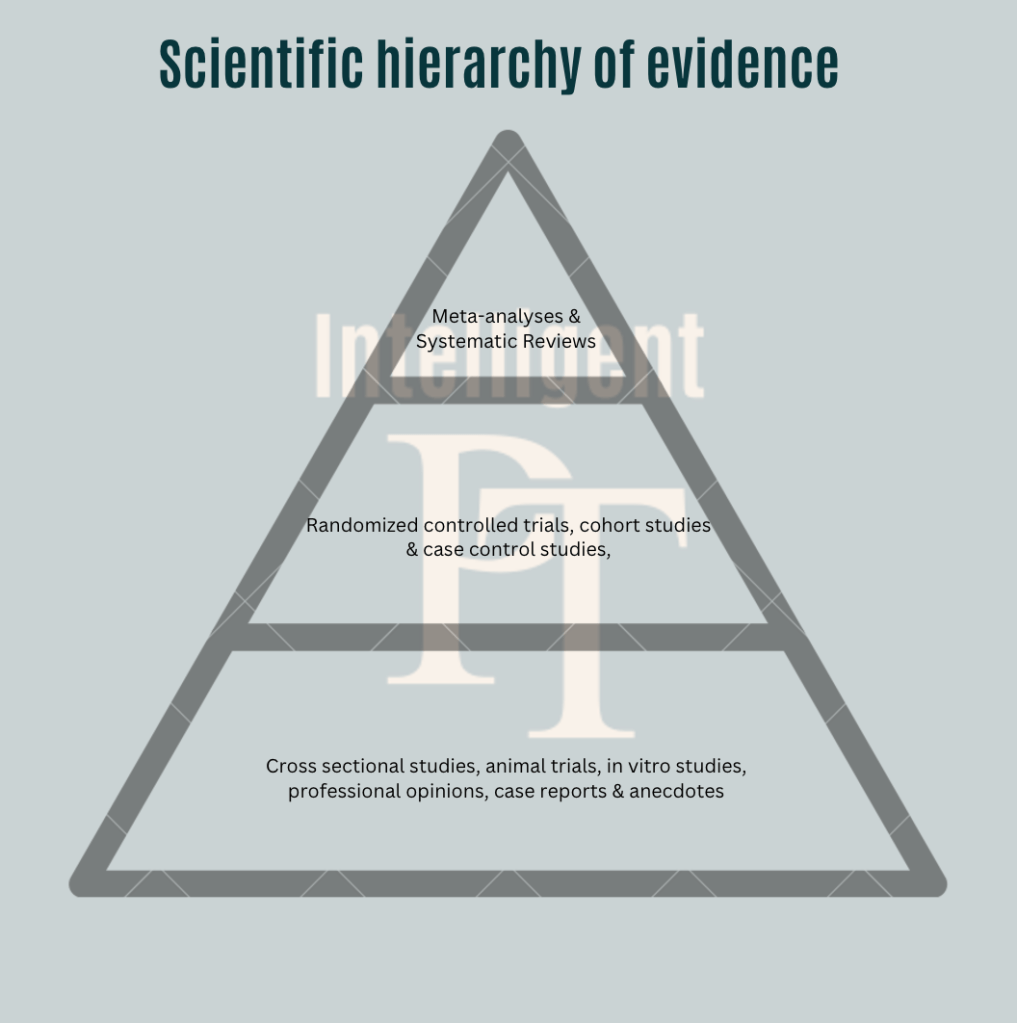
All studies that reported depression between the years 1992-2012 were not randomized, placebo-controlled trials and rank below these clinical trials in the scientific hierarchy of evidence. These studies will be examined in the literature review below.
LITERATURE REVIEW
The first study that looked at this link is from 1995, titled ‘Clinical and endocrine effects of finasteride, a 5 alpha-reductase inhibitor, in women with idiopathic hirsutism’ and looked at the anti-hirsutic effects of finasteride.

The study size was relatively low at 18 patients. However interestingly the study found that more patients treated with the placebo reported depression, then patients treated with finasteride, the opposite result that you would expect if finasteride causes depression. What many people fail to consider about finasteride is that its a highly efficacious drug, and by someone taking finasteride to relieve conditions (AGA and BPH) when they notice improvements it may improve their mental health. This is why I fundamentally disagree with people advising people against finasteride because they believe it caused them depression. Many men (and women) that experience hair loss have very poor mental health (depression and anxiety) due to how their hair loss affects their confidence, so it’s ultimately up to the discretion of the user.
Although this study actually indicates an inverse relation between Finasteride and depression, it is only fair to mention its limitations. This study was only on women, and differences in physiology may make result extrapolation to men slightly unreliable. The sample size was also relatively low at 18.
Looking back to the literature review, the next study comes from 2000 titled ‘Profile of men randomized to the prostate cancer prevention trial: baseline health-related quality of life, urinary and sexual functioning, and health behaviors’.

This is a much larger study, with 18,882 randomized participants. This is a very high quality study, with a control group, and a 7 year duration. This follow up study assessed the quality of life in men taking finasteride, and showed no evidence that finasteride negatively impacted life quality. It’s important to note depression wasn’t assessed specifically, nonetheless it is one of the biggest contributors to life satisfaction which was assessed. There was little to no difference in general health and life satisfaction ratings between placebo and finasteride.
The next study comes from 2002, and looks directly at whether Finasteride Independently induced depression in men. Study title; ‘Drug or symptom-induced depression in men treated with alpha 1-blockers for benign prostatic hyperplasia? A nested case-control study’.

One important concept of this study is determining whether higher rates of depression were associated with having androgenic alopecia, or are they better associated with Finasteride treatment. In simpler terms, they’re looking at whether the condition of hair loss itself is the main factor in causing depression, rather than the medication used to treat the hair loss.
The study, as you’d expect, found that crude incidence rates for depression were associated with depression, however the researcher noted that these rates were not adjusted for the presence of BPH (or AGA). The researchers ultimately concluded after analyzing 754,047 men aged at least 45 years old, that the risks of depression associated with finasteride was due to the presence of disorders it intended to treat (i.e BPH and AGA), rather than finasteride administration itself.
The next study also comes from 2002, titled ‘Depression circumstantially related to the administration of finasteride for androgenetic alopecia’ was a review of 23 case reports.

Before continuing it is important to note that although case reports/studies have a place within scientific inquiries, they rank at the bottom of the scientific hierarchy of evidence. There is a small sample size, no comparison with a control group, and its entirely possible that case reports that report a serious side effect are filled with outliers and are not representative of the general population.
With all that being said im still a big proponent of considering anecdotes and case studies because they can often provide insights that are so specific researchers don’t look for in studies, and can provide valuable lines of investigation for future studies.
This paper reports on 19 patients who experienced a range of moderate-severe depression during finasteride treatment (1mg/day for AGA). Their depression were said to have affected relationships, eating habits, sleep, and anxiety. It was said to have developed 9-19 weeks after finasteride administration. Symptoms quickly improved once they stopped taking the drug. Two patients restarted finasteride and saw depression return within two weeks. Researchers mentioned further studies are needed on the matter as these were circumstantial observations. Nonetheless this paper is worth mentioning.
So far the overwhelming majority of evidence shows there’s no proof finasteride causes depression.
In 2006 a review article titled ‘A new look at the 5alpha-reductase inhibitor finasteride’, discussed the potential mechanism by which finasteride may cause depression based on the preliminary rodent studies. However the authors acknowledge many of the different factors which I mentioned in the mechanisms of action section, which makes extrapolation of these results to humans irresponsible.

Just to be clear the differences are in humans finasteride is a selective inhibitor of the type II isoenzyme of 5AR only, whereas in rodents finasteride blocks both, and the type I isoenzyme (unaffected by finasteride) is the prominent enzyme located in the brain where neurosteroids are produced.
The review article also reviews all the past literature I’ve mentioned, and the authors also concluded that it doesn’t appear that finasteride causes depression and anxiety (as well as other side effects).

The new study also comes from 2006, titled ‘Finasteride induced depression: a prospective study’ in my opinion is the first to bring compelling evidence about this relationship.

This study looked at 128 men with androgenic alopecia, and noticed a small but still statistically significant rise in depression. However, as the researchers acknowledged as a limitation, this study did not have a control group making any results inconclusive, as other factors may have contributed. For instance finasteride has been known to cause loss of libido and ED in a very small number of users, and male ED has a strong effect on depression. Contrary to popular belief ED from finasteride is very treatable so if this is what has an indirect effect on depression, it shouldn’t be alarming to potential users.
Another limitation of this study was exposure duration. The follow up period was only 2 months which is relatively short. Additionally in more modern studies it has been reported that side effects experienced by finasteride decline with continuation if you persist for longer than 3 months, and as this study is only 2 months the researchers did not get a chance to see if depressive symptoms would persist during treatment. Ultimately I dont think this is compelling evidence.
The next piece of literature was published in 2011, titled ‘Adverse side effects of 5α-reductase inhibitors therapy: persistent diminished libido and erectile dysfunction and depression in a subset of patients’, and served as a review of all Finasterides reported side effects.

In my opinion its commentary in the section about the Finasteride-Depression link was inaccurate. The commentary mentioned the animal model as the proposed theory on how Finasteride may cause depression but didn’t acknowledge all the differences in human physiology which makes the neurosteroid theory inept. They don’t acknowledge the limitations of the two human studies that propose there is a relationship between finasteride and depression. They also report depression as a persistent side effect despite there being much larger amounts of evidence to the contrary.
The next piece of literature was a case study published in 2012 titled ‘Depressive symptoms and suicidal thoughts among former users of finasteride with persistent sexual side effects’. The author is Michael S Irwig. There are lots of problems with this paper. Firstly, although the study claims there is a control group there is no placebo administration, so it does not account for other potential factors that may have contributed to the development of these symptoms in the finasteride group. Additionally the study does not account for recall bias, and relies on participants’ memory of their medical and psychiatric histories.

Laslty, the study uses a cross-sectional setup, meaning data on depressive symptoms and suicidal thoughts were only collected once. The particular approach makes it hard to prove any cause-and-effect link between finasteride use and depression. A longitudinal study, tracking people over time, would be more effective for elucidating any long-term psychological effects of finasteride.
A lot of the studies that come after 2012 don’t consider nocebo effect, and are fundamentally flawed. The fundamental problem with the statement ‘finasteride causes depression’ is it does not consider various factors. While there is plenty of evidence that finasteride administration correlates with depression, it doesn’t account for factors such as the relationship between AGA-depression and ED-depression. The entire point of taking finasteride, especially for androgenic alopecia, is that you’re unhappy with a condition you have and you’re trying to treat it using the drug, but this exacerbates the number of finasteride users who are unhappy and in some cases depressed.
For those well-involved in hair loss communities, it is clear some people are seriously mentally affected by losing their hair, and this can lead to a loss in confidence. For these people finasteride would only serve to improve their mental state, and shouldnt be discouraged by a theory about neurosteroids that can be disproved after a few hours of research.
Another factor commonly overlooked when discussing finasteride and depression is the presence of sexual dysfunction and erectile dysfunction amongst some finasteride users. Almost all experts in men’s sexual health acknowledge that there is a ‘self-perpetuating loop’ between erectile dysfunction and depression. In simpler terms, having erectile dysfunction can cause some people to develop depression, and in the state of depression it has been shown to affect libido and also cause ED, so both conditions reinforce each other leading to a ‘vicious cycle’. This is very common seen in the self-perpetuating loop involved in sexual performance anxiety.
Inevitably a very small portion of finasteride users will experience erectile dysfunction due to physiological differences too complex to be explained in this article, and because of this they develop depression. This leads to a self-perpetuating loop that causes both symptoms to persist, even after administration cessation.
The last piece of evidence I want to point out is a meta-analysis form 2020. Titled ‘Association Between 5-Alpha Reductase Inhibitor Use and The Risk of Depression: A Meta-Analysis’, the authors conclude dutasteride had a statistically significant association with depression whereas finasteride did not. This conclusion fits in perfectly with the mechanistic information I presented before. Dutasteride does inhibit type 1 5AR, whereas finasteride does not, and as the type 1 5AR is the one located in the brain (and thus involved in neurosteroid production) it is possible that dutasteride may lead to a dysregulation between the amount of neurosteroids and their precursors and thus affect signaling in the brain responsible for mood regulation.

Ultimately, while finasteride has been linked to depression by some due to its proposed effects on neurosteroids, this theory largely falls apart, in my opinion, under closer examination. Finasteride primarily inhibits the type II 5-alpha reductase enzyme, which is not active in the brain where neurosteroids like allopregnanolone are synthesized. The majority of high-quality studies, including randomized controlled trials and meta-analyses, do not support a causal link between finasteride use and depression. Notably, depression has not been a documented side effect in placebo-controlled trials, which stand at second to the top of the evidence hierarchy. Case studies suggesting otherwise are limited in their validity due to factors like small sample sizes, lack of control groups, and potential bias.
It’s essential to also consider alternative explanations for the observed link between finasteride and depression, such as the underlying psychological impact of androgenic alopecia (AGA) and benign prostatic hyperplasia (BPH), conditions for which finasteride is prescribed. Hair loss, in particular, can significantly affect self-esteem, leading to depression independently of finasteride use. In some cases, finasteride may improve mental health by addressing hair loss. Finally, for those who do experience side effects like erectile dysfunction (ED), a well-recognized vicious cycle exists between ED and depression, as each condition can exacerbate the other. This interaction, rather than the drug per se, may account for the observed depressive symptoms in a subset of users.
So why was Depression listed as one of the side effects of Finasteride. Well interestingly back in 2017, the PFS (Post Finasteride Syndrome) Network rallied to have stronger warnings including depression listed as a side effect, however even the FDA concluded there was no reasonable evidence between Finasteride and persistent depression. It seems the FDA added it as a side effect based on some low quality case reports.

Finally, a meta analysis from 2024 showed no association with 5 alpha reductase inhibitors and depression. This meta analysis pooled over 2 million patients.

All in all, evidence linking Finasteride and depression is sparse and has plenty of high quality science contradicting it. The fundamental theory on how this occurs is inaccurate, and this topic does not consider how hair loss itself may be the cause of depression, or consider how treating conditions using finasteride may actually help alleviate poor mental health in many.
 Intelligent Personal Training