
Table of contents
Personal Note
Compound description and mechanism of action
RAD-140 Desired Effects and Uses
RAD-140 Side Effects
Miscellaneous
Personal Note
I have never used RAD-140 and I’m not affiliated with any SARM manufacturers/suppliers, and do not encourage its use. All information used is based on research, of which is cited. If information is missing a citation email x and the citation will be provided to further your own personal research.
Compound description and mechanism of action
RAD-140, also known as Testolone and Vosilasarm, is a non-steroidal selective androgen receptor modulator (SARM). SARMS are a class of drugs developed to activate the androgen receptors in specific tissues and transcribe anabolic effects. They were developed as an alternative treatment to AAS in treatment of muscle wasting conditions, in order to minimize potential impact on reproductive tissues commonly associated with AAS.
There are a few mechanisms associated with their tissue-specific activities; 5 alpha reductase non activation, and androgen receptor coregulators. It should be noted that these are still debated and are all largely theoretical. Other theories such as non-genomic signaling and tissue distribution theories have mostly conflicting evidence.
5 alpha reductase non activation: 5 alpha reductase is only expressed in certain tissues, and that’s why DHT is found in high levels in the scalp and prostate but not in muscle tissues. It has been argued that since SARMS cannot be metabolized by 5 alpha reductase, they can’t be converted into a more potent molecule in the scalp and prostate, and their effects on these 5AR dense areas are limited to their effects only.
Androgen receptor coregulators: Androgen receptors are found in the cytosol of the cell. When a hormone binds to the AR, this complex moves to the nucleus where it regulates gene expression. For example Testosterone is an agonist of the AR and leads to the upregulation of gene expression which increases the synthesis of contractile proteins (muscle growth). However there are also antagonists of the AR which down regulate gene expression. However SARMS are mixed agonist/antagonists, meaning they agonize AR receptors in bone and muscle, but are antagonists of the AR in tissues such as the prostate. The reason they are agonists in muscle and bone tissue, and antagonists in prostate tissue is because in bone and muscle tissue coactivators of AR are in excess whereas in prostate tissues corepressors are in excess.
RAD-140 has been shown to be a full and partial agonist, exerting full agonistic/anabolic effects on AR in muscles and bones, and partial agonistic effects in the prostate gland and seminal vesicles. Its half life is shown to be between 45-60 hours however there is evidence and active debates online that its half life is greater than 70 hours.
RAD-140 is also referred to as Vosilasarm and EP0062 in studies, and as Testolone in bodybuilding circles. RAD-140 was first developed by Radius health in 2010, but was sold and is now being developed by Ellipses Pharma.
RAD-140 DESIRED EFFECTS AND USES
EFFECT ON MUSCLE MASS + DISCUSSION ABOUT ANDROGENICITY
To date there have been 0 human clinical trials that have shown an increase in muscle mass from rad-140 administration. The only studies showing an increase in muscle mass come from rodent studies. Before delving into these studies I’d like to point out the major pitfalls of extrapolating rodent studies into humans. We have major biological and environmental differences to rodents, and rodent models are notorious for oversimplifying our complex bodily systems. A prime example in the context of muscle-building is myostatin inhibitors, which had significant effects on muscle mass of mice, creating ‘mighty mice’, however famously failed in human clinical trials and have not had any further development due to their lack of efficacy.
With that being said, as a SARM RAD-140 has a family of compounds that have shown efficacy to build muscle with human data, so likely to some extent the data can be extrapolated. The true efficacy of RAD-140 is pure speculation but by looking at preclinical data and anecdotes we can paint a better picture of it.

In a 2010 study of RAD-140 titled ‘Design, Synthesis, and Preclinical Characterization of the Selective Androgen Receptor Modulator (SARM) RAD140’, it appeared RAD-140s ability to selectively target muscle tissue was superior to that of testosterone. In the study rats were castrated to create a baseline of androgenic activity, and RAD-140 began stimulating muscle growth at a dose of 0.03 mg/kg. The growth of prostate (a measure of androgenic activity) was less in rats dosed with 10 mg/kg of RAD-140 than 1 mg/kg of Testosterone Propionate.
RAD-140 was actually found to antagonize the stimulatory effects testosterone had on the seminal vesicles. In simpler terms, the co-administration of Testosterone and RAD-140 had less of a stimulatory effect on the seminal vesicles than administration of Testosterone by itself.

The superior selectivity of RAD140 is further supported by studies in intact rats, which provide a more relevant model for the target human population.
RAD-140 was shown to stimulate muscle growth without significantly affecting prostate growth up until a dosage of 30mg/kg.

Next researchers used an animal model more relevant to a human population, young, male cynomolgus monkeys. This is because they have more genetic similarities to humans compared to rodents. They administered dosages of 0.01 mg/kg, 0.1 mg/kg, and 1 mg/kg for 28 days.
With a dosage of 0.1mg/kg, the mean weight gain was greater than 10%. Keep in mind this is just after 28 days of RAD-140 administration. The effects were similar with a 1.0 mg/kg dosage.

These results are significant considering the relatively small time period the drug was administered. However these results are indicative of pure muscle mass, so researchers performed a DEXA scan to determine how much of this was lean mass.

It was shown that the mean of lean mass was far greater than fat mass, however as you can see the error bars (standard deviations) are quite large so results did not achieve statistical significance, although researchers did specifically mention they believed this was due to the small group sample size (3).
However there is actually conflicting evidence in preclinical data. In a study titled ‘RAD140 (Testolone) negatively impacts skeletal muscle adaptation, frailty status and mortality risk in female mice’ researchers investigated how RAD-140 impacts muscle adaptation – a measure of a muscle’s ability to adapt to stress. They ultimately concluded RAD-140 did not impact strength of female mice.

However this study had a lot of flaws. Firstly, muscle adaptation is not necessarily a measure of muscle size. Secondly, the study gave the mice RAD140 through drinking water, leading to inconsistent dosages – some mice likely consumed more than intended, while others consumed less. Thirdly, an all female population is not indicative of a male population. Lastly, it had a small sample size of 23.
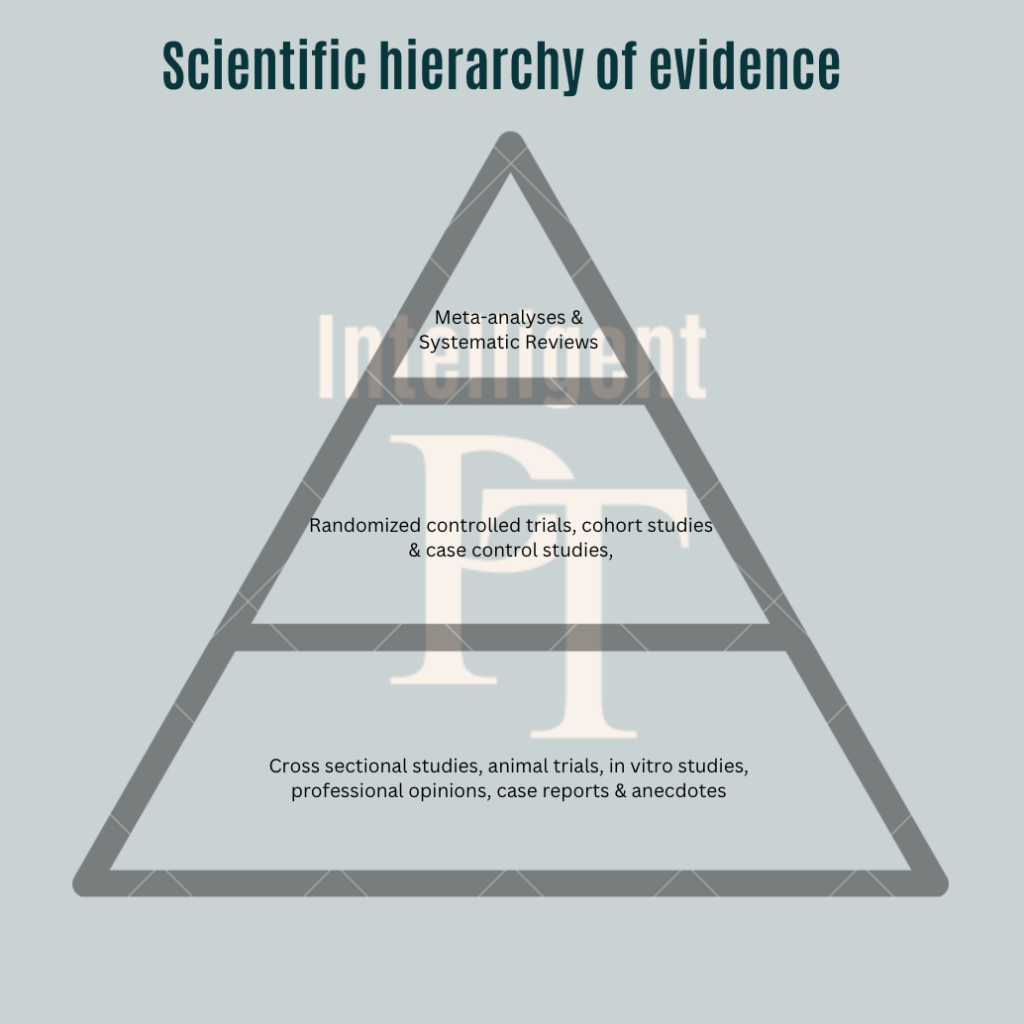
A lot of the evidence that RAD-140 is a potent muscle mass builder comes in the form of anecdotes. Whilst anecdotes rank at the bottom of the scientific hierarchy of evidence and are far from an objective source of information, they shouldn’t be ignored either. Anecdotes provide valuable lines of inquiry and insight, and may help shape future studies. In clinical trials, researchers may not realize a side effect of a compound simply because they weren’t looking for (measuring).
Anecdotely most users of RAD-140, report significant muscle gains from RAD-140, most notably within 4-8 weeks. The muscle mass gains are reported to be more mild compared to ASS. It has also been reported to be effective during a cut with low dose Testosterone.
EFFECT ON STRENGTH
An indirect benefit from increased muscle size is improved strength. Due to RAD-140’s muscle building qualities it is expected users would have improved strength. This seems to be the case anecdotally, with most users reporting modest strength gains from the compound. It has also been reported to cause aggression, making it a popular pre-workout compound to drive force production up recreationally. There are no studies that show its effect on strength except for the one previously mentioned on female mice. However that study had a myriad of flaws in its design and is not indicative of what one can expect from RAD-140.
EFFECT ON BONE DENSITY
There is no direct evidence RAD-140 affects bone density, however there is a wide body of research about how androgens play a positive role in maintaining bone health, as well as other SARMS showing promise in improving bone health. A notable example is LGD-4033 which was shown to increase serum procollagen type 1 propeptide (s-P1NP), a biomarker of bone anabolism.
EFFECT ON BODY FAT PERCENTAGE
By increasing muscle mass, users have a higher metabolism making an eventual fat loss phase easier and more efficient, but this is an indirect effect. There is no direct evidence that looks at this. Speculatively, it may have muscle-sparing qualities helping maintain muscle mass during a phase of caloric deficit, and is often done so recreationally.
EFFECT ON NEUROPROTECTION
One of the most interesting effects of RAD-140 is its neuroprotective properties. In a study titled ‘Selective Androgen Receptor Modulator RAD140 Is Neuroprotective in Cultured Neurons and Kainate-Lesioned Male Rats’, researchers explored RAD-140s effect on the MAPK/ERK signaling pathway.

RAD-410 activates the MAPK/ERK signaling pathway, which is crucial for protecting neurons from cell death from Aβ and AAII. It did not prevent neuron death from hydrogen peroxide. Essentially its neuroprotective effects are specifically tailored towards preventing apoptotic cell death.
This may be of particular interest to people with ADHD who take methylphenidate (ritalin etc) or amphetamines (adderall etc).
As mentioned before RAD-140 activates the MAPK/ERK signaling pathway. The MAPK/ERK pathway, when activated, phosphorylates and activates survival-promoting factors CREB (cAMP response element-binding protein) and anti-apoptotic proteins like Bcl-2.
ERK can also downregulate JNK and p38 MAPK pathways, both of which are activated during oxidative stress and excitotoxicity.
Essentially, RAD-140 per this rodent model, may help prevent excitotoxicity and neuron apoptosis caused by drugs used to treat ADHD.
RAD-140 SIDE EFFECTS
EFFECT ON LIVER HEALTH
Unlike LGD-4033, there is actually clinical evidence RAD-140 causes adverse affects on liver health. For those who have not read the article on LGD-4033, the only evidence LGD-4033 damages the liver comes from 2 case reports. A big issue is that case reports are retrospective. The patients say they took LGD-4033, but there’s no regulation ensuring the quality of SARMs products. So, while the bottle might be labeled LGD-4033, there’s no way to confirm that’s actually what they took.
In regards to RAD-140 hard evidence comes from two papers. The first titled ‘A First-in-Human Phase 1 Study of a Novel Selective Androgen Receptor Modulator (SARM), RAD140, in ER+/HER2- Metastatic Breast Cancer’, reported a 59.1% increase in Aspartate Aminotransferase (AST) and 45.5% increase in Alanine Aminotransferase (ALT). AST and ALT are important biomarkers for liver health, with elevated levels indicating inflammation and injury of the liver among other things.

The other paper titled ‘343P – Phase I dose escalation study of a selective androgen receptor modulator RAD140 in estrogen receptor positive (ER+), HER2 negative (HER2-) breast cancer (BC)’, simply reports elevated AST and ALT levels but does not specific specific percentage increases.

Although this seems like compelling evidence RAD-140 can cause liver damage, paired with the existing case reports, there is some contradictory evidence that should be pointed out. In the context of liver damage, some chemotherapeutic treatments can have elevated levels 2-5 and even 10 times ULN (upper limit of normal). For example, some oncologists have stated online that they only worry about elevated AST and ALT levels when they are 5 times the ULN during Taxol (Paclitaxel) treatment, however this is far beyond my area of knowledge. In the first in human phase 1 study, the exclusion criteria was only 28 days after chemotherapy. Some chemotherapies can cause prolonged elevation of AST and ALT.

It’s unclear whether this would have affected the studies data but is something worth considering when thinking about RAD-140. Many members in bodybuilding forums when discussing this topic mention that ‘the liver can regenerate up to 90% of itself’, however caution and tracking AST and ALT levels is worth it.
EFFECT ON TESTOSTERONE
Contrary to how they are marketed by SARMS providers, SARMS do suppress testosterone levels. SARMs suppress luteinizing hormone (LH) and follicle-stimulating hormone (FSH) via the hypothalamus-pituitary-testis axis (HPTA), leading to a dose-dependent drop in testosterone levels.
In the original paper on RAD-140, ‘Design, Synthesis, and Preclinical Characterization of the Selective Androgen Receptor Modulator (SARM) RAD140’, researchers investigated the testosterone suppression on the monkeys. All three dosage groups (0.01, 0.1, and 1 mg/kg) had similar suppression of total testosterone levels of around 200-300 ng/dl. This level of suppression is similar to that seen in LGD-4033. The only limitation of this study is this comes from an animal model.

EFFECT ON LIPID LEVELS
In the original RAD-140 study, ‘Design, Synthesis, and Preclinical Characterization of the Selective Androgen Receptor Modulator (SARM) RAD140’ changes in lipid levels are recorded at the end of the study in the references section.

Similar to human clinical trials on LGD-4033, another non-steroidal SARM, a decrease in HDL was seen amongst the Cynomologous monkeys. A decrease in HDL levels is generally seen as a negative for cardiovascular health. Interestingly, LDL levels also decrease amongst the monkeys, which is generally seen as a positive for cardiovascular health.
Although it seems like RAD-140 is somewhat neutral on lipid profiles, this data comes from preclinical animal models, and is not necessarily indicative of a human population. Many anecdotes report an overall negative impact on lipid profiles after RAD-140 administration.
In my opinion this is inevitable for a SARM, and even the researchers acknowledge that the chemistry of a SARM indicates an expected lowering. The researchers cite a paper titled ‘Gene expression analyses in cynomolgus monkeys provides mechanistic insight into high-density lipoprotein-cholesterol reduction by androgens in primates’.
EFFECT ON AGGRESSION
Although this is listed as a side effect, too many in bodybuilding or powerlifting circles this is a benefit of taking RAD-140. Many anecdotes show a marked increase in aggression, allowing them to lift heavier.
EFFECT ON ESTROGEN + GYNECOMASTIA
RAD-140 does not aromatise into Estrogen, or 5 alpha reduce. The growth of glandular tissue in men is due to an imbalance in male and female sex hormones in breast tissue. As a result of RAD-140 administration less androgens can bind to AR and thus more is available to be aromatised into estrogen, and the suppression of testosterone can cause there to a hormonal imbalance (androgens relative to endogenous) which leads to gynecomastia formation.
This is an issue commonly reported in anecdotes.
RAD-140 also has an affinity for progesterone receptors, and in sensitive individuals progestogenic drugs can cause the onset of gynecomastia. A case study about RAD-140 induced gynecomastia formation is titled ‘Reversible Gynecomastia and Hypogonadism Due to Usage of Commercial Performance-Enhancing Supplement Use’.
Depending on an individual’s hormonal profile earlier, and other factors, an individual might experience low estrogen or high estrogen. Each state carries its own side effects which can be viewed in a separate article.
EFFECT ON CARDIOVASCULAR HEALTH
Androgens are known to inhibit a molecule called 11beta-hydroxylase in rat adrenal glands, and this inhibition leads to the downstream output of 11-deoxycorticosterone, which can result in cardiac lesions in rat hearts.
There are a number of case reports linking RAD-140 to heart problems. However there are some key limitations to these studies which I will delve into after presenting them.
A case study named ‘Acute Myocarditis From the Use of Selective Androgen Receptor Modulator (SARM) RAD-140 (Testolone)’, presents a 32 man who after sourcing RAD-140 online experienced Acute Myocarditis after a short time of usage. Acute Myocarditis is the sudden inflammation of the heart muscle and usually results in chest pain and shortness of breath but can oftentimes lead to more serious outcomes like heart failure and death.
A case study named ‘Myopericarditis Following Use of Selective Androgen Receptor Modifier “RAD-140”’, presents a 16 year old boy who experienced Myopericarditis after one singular dosage of RAD-140. Myopericarditis involves inflammation of both the heart muscle (myocardium) and the surrounding sac (pericardium), while acute myocarditis is inflammation of only the heart muscle.
Both papers mention that the mechanism by which RAD-140 could cause these heart problems is unknown.
Anecdotes and case reports rank right at the bottom of the scientific hierarchy of evidence. Although they still should be mentioned they lack a control group, have biases, and have literally the smallest sample size possible, 1. Another big issue is that case reports are retrospective. The patients say they took RAD-140, but there’s no regulation ensuring the quality of SARMs products. So, while the bottle might be labeled RAD-140, there’s no way to confirm that’s actually what they took.

INSERT MY SCIENTIFIC HIERARCHY OF EVIDENCE PHOTO
MISCELLANEOUS
What are the potential clinical applications of RAD-140? RAD-140 holds promise in treating androgen receptor-positive, estrogen receptor-negative, HER2-negative advanced breast cancer.
How does RAD-140’s mechanism of action lead to tissue selective muscular growth?
As described in the compound description section, RAD-140 acts as a mixed agonist/antagonist of the androgen receptor, due to some specific molecular qualities but further research is definitely required.
What is RAD-140?
In my opinion the best classification of RAD-140 is as a nonsteroid SARM and a mixed-partial agonist of the androgen receptor, displaying greater tissue selectivity milligram for milligram than AAS.
How does RAD-140 affect body fat percentage or fat mass?
By increasing muscle mass, users have a higher metabolism making an eventual fat loss phase easier and more efficient, but this is an indirect effect.
What is RAD-140’s affinity to the AR receptor?
It binds to the AR receptor with an affinity of 0.9nM
Does RAD-140 bind to progesterone receptors?
Yes
Does RAD-140 bind to mineralocorticoid receptors?
Unclear with current research.
Does RAD-140 bind to glucocorticoid receptors?
Unclear with current research.
What is the anabolic:androgenic ratio of RAD-140?
Its been reported as 90:1 but this is not present in the literature.
 Intelligent Personal Training