
It’s been a longstanding meme in hair loss communities that there are studies that show anything can help treat hair loss. A common joke is for someone taking the nuclear stack of hair loss drugs you say their piss would help grow hair. Another long standing meme is that leg training may actually help treat hair loss. Interestingly there are actually a few studies that show a connection between the too.
Starting with leg training.
Its been speculated in the past that resistance training, specifically leg training, increases Testosterone levels so there has been a link between leg training and hair loss. However by doing lower body weight training you are also upregulating androgen receptors in the muscles of the lower body. The increased muscle mass in the legs means more overall upregulation in the lower body than in the upper body. This leads to decreased serum DHT levels because the muscles bind to more DHT, leaving less DHT to bind to the scalp.
Lower body weight training causes post-exercise edema, which leads to blood flow being shunted from the scalp to the muscles. This may reduce blood flow and oxygen to the scalp. Although at first glance this seems like a bad thing as it’s commonly touted that blood flow is a primary culprit of hair loss, however there is mounting evidence that hypoxia (low oxygen levels) in the scalp may actually stimulate hair growth .
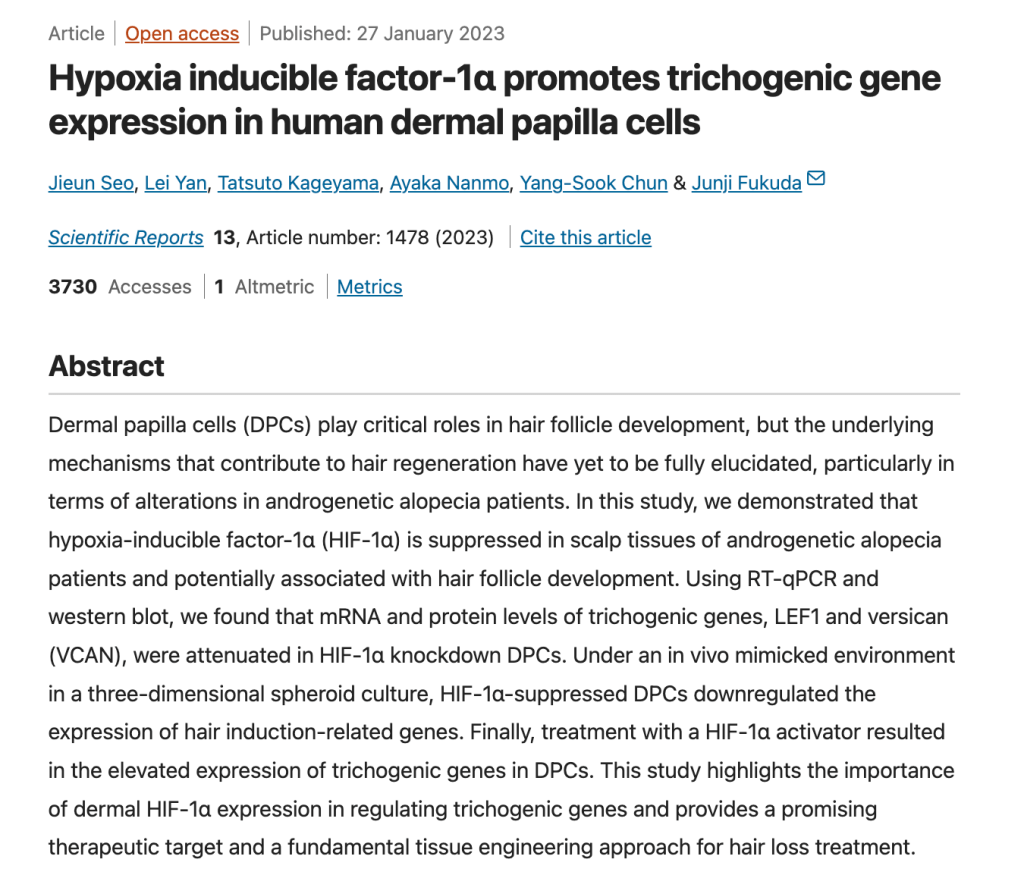
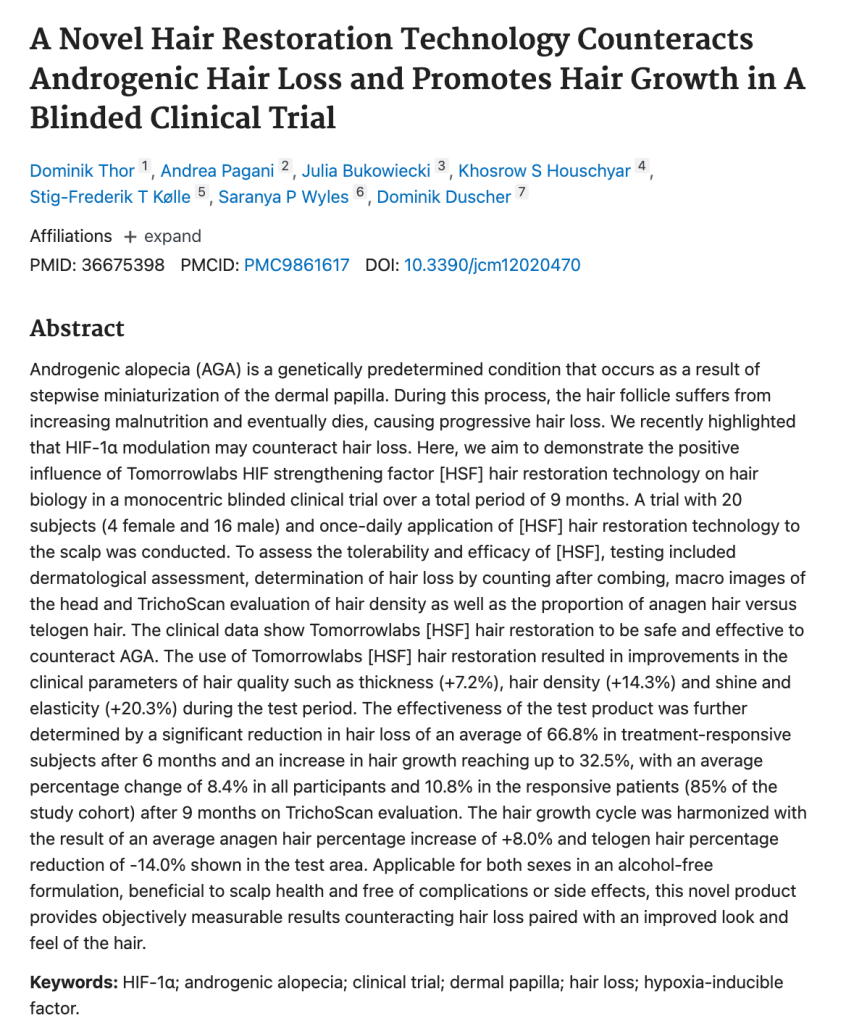
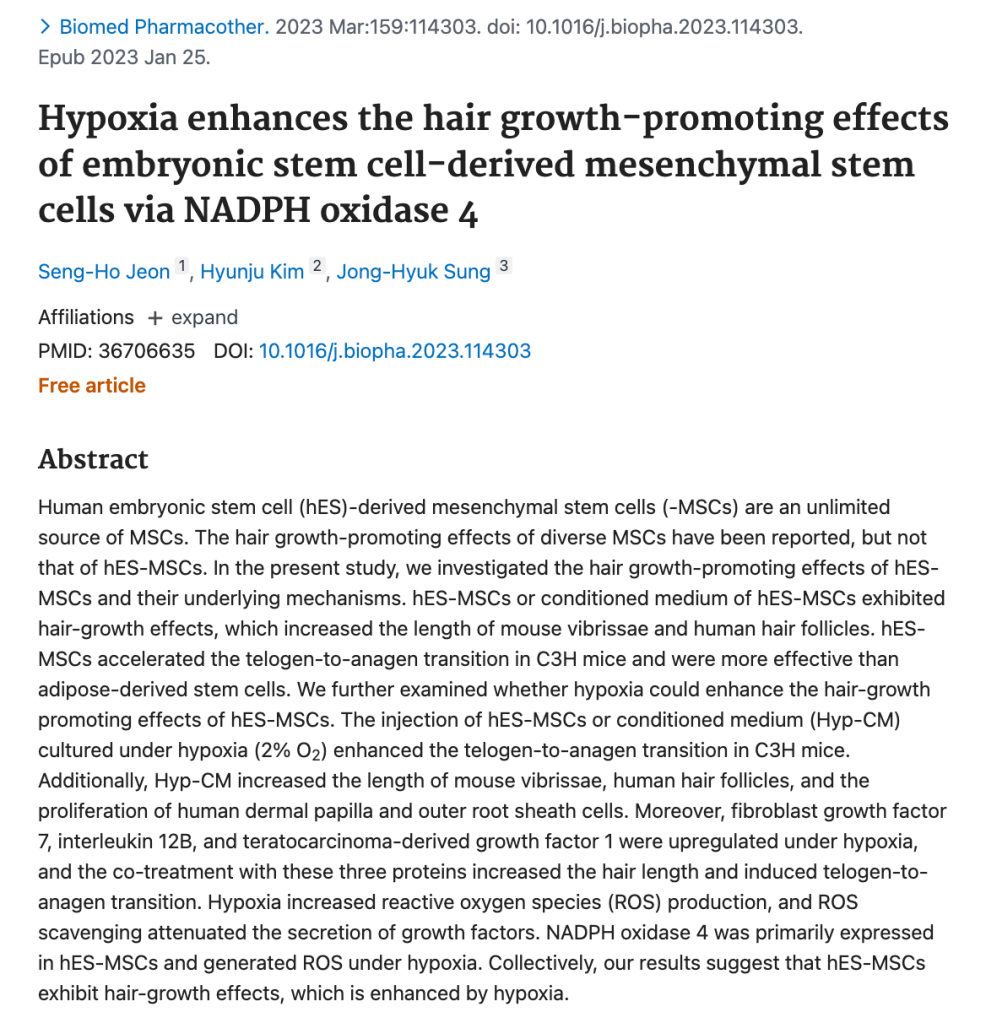
The Weight training-Hair Loss relationship was explored in a paper titled ‘The relationship between exercise and the changes of androgenetic alopecia’ make some unique points about how exercise selection may impact AGA severity. “This study found that stretching exercises such as gymnastics, yoga, and stretching did not improve the condition. This may be because the intensity of such exercises is relatively low and they fail to cause changes in hormone levels in the body”.
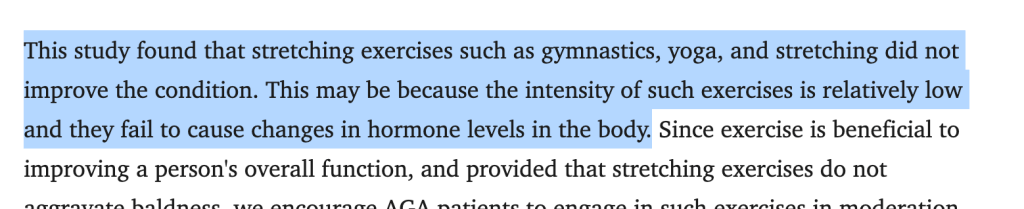
Ultimately researchers believed the intensity of the exercise correlated with a lessening of the severity of Androgenetic Alopecia. This furthers the hypothesis about leg training. Leg weight training is by far the most intense form of exercise, with heavy compound movements like barbell squats, leg presses, and squat variations involving the most number of muscle groups relative to other movements aside from possibly deadlifts. Clearly, there is a link between intensity of resistance training and hormonal fluctuations, lower body androgen receptor upregulation, and reduced blood flow and oxygen in the scalp. However it actually extends further than this.
As many of you probably know, the final stage in DHT-induced miniaturization of the hair follicle is the calcification and fibrosis of the scalp, where by this point hair growth becomes next to impossible without expensive and unproven treatments. It is actually possible that leg training prevents the calcification and fibrosis of the scalp. In a study titled “Musculo-follicular stimulation of the WNT pathway in a CYP1A2 knockout rat model of androgenic alopecia: clarifying the dihydrotestosterone paradox and rate-limiting recovery factors”, researchers speculated that the oscillating forces from stabilizing and moving heavy weights with the lower body can vibrate and spread to the scalp which can break up scalp calcification and prevent fibrosis.
It seems that high bar squats may be particularly efficient at this as the barbell sits on top of the trapezius muscle, connects to the base of the skull and the connective tissue of the scalp, including the galea aponeurotica and barbell whip from a loaded barbell can cause this vibration to extend to the scalp.
How cow urine could help hairloss?
In a study called ‘Development and evaluation of formulations of microbial biotransformed extract of tobacco leaves for hair growth potential’ researchers evaluated how Cow urine could be used to treat hair loss.
Tobacco leaves have a long history of traditional use for hair growth promotion.Researchers found that specific microorganisms, Pseudomonas aeruginosa and Enterococus avium, grew in a mixture of cow urine and tobacco leaves, and they believe that these microorganisms are responsible for biotransformation the tobacco leaves. Researchers believed this biotransformation might produce compounds that inhibit 5-alpha reductase. By inhibiting 5-alpha reductase, the biotransformed tobacco leaf extract could potentially reduce dihydrotestosterone levels in the scalp, thereby promoting hair growth.
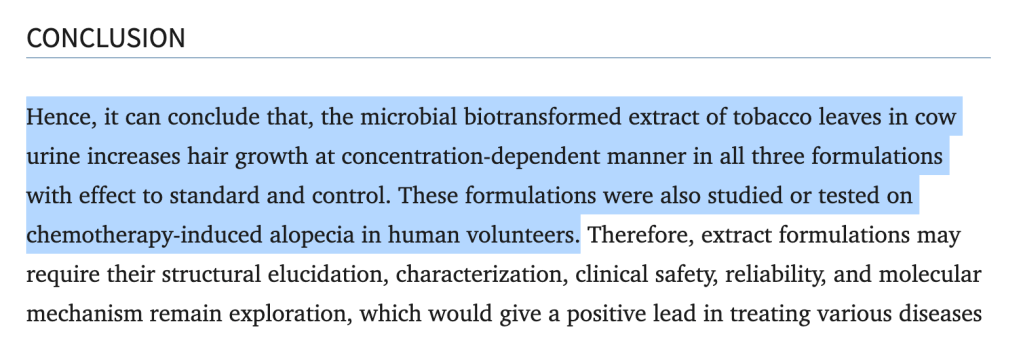
In the conclusion section researchers stated “Hence, it can conclude that, the microbial biotransformed extract of tobacco leaves in cow urine increases hair growth at concentration-dependent manner in all three formulations with effect to standard and control. These formulations were also studied or tested on chemotherapy-induced alopecia in human volunteers.”
This article was a laugh and a half to make and was good to switch up from my more serious style of research and blogging. If you are serious about treating hair loss speak to your doctor about Finasteride and Minoxidil.
Refrences:
Murkute AV, Sahu MS, Mali PY, Rangari VD. Development and evaluation of formulations of microbial biotransformed extract of tobacco leaves for hair growth potential. Pharmacognosy Res. 2010 Sep;2(5):300-3. doi: 10.4103/0974-8490.72328. PMID: 21589756; PMCID: PMC3093036.
Jeon SH, Kim H, Sung JH. Hypoxia enhances the hair growth-promoting effects of embryonic stem cell-derived mesenchymal stem cells via NADPH oxidase 4. Biomed Pharmacother. 2023 Mar;159:114303. doi: 10.1016/j.biopha.2023.114303. Epub 2023 Jan 25. PMID: 36706635.
Seo, J., Yan, L., Kageyama, T. et al. Hypoxia inducible factor-1α promotes trichogenic gene expression in human dermal papilla cells. Sci Rep 13, 1478 (2023). https://doi.org/10.1038/s41598-023-28837-0
Thor D, Pagani A, Bukowiecki J, Houschyar KS, Kølle ST, Wyles SP, Duscher D. A Novel Hair Restoration Technology Counteracts Androgenic Hair Loss and Promotes Hair Growth in A Blinded Clinical Trial. J Clin Med. 2023 Jan 6;12(2):470. doi: 10.3390/jcm12020470. PMID: 36675398; PMCID: PMC9861617.
Jiang Y, Shi Q, Huang Y, Li J, Xie H, Liu F. Relationship between the exercise and severity of androgenic alopecia. Zhong Nan Da Xue Xue Bao Yi Xue Ban. 2021 Jul 28;46(7):725-730. English, Chinese. doi: 10.11817/j.issn.1672-7347.2021.200801. PMID: 34382589; PMCID: PMC10930124.
 Intelligent Personal Training